What Bolivar Peninsula homeowners should organize before a storm
By Bruce Cline | Bayside Bruce
As I sit here writing this, the Bolivar Peninsula is under a tropical storm warning. The current forecast calls for winds up to 65 mph and four to eight inches of rain.
Of course, anyone who has lived along the Texas coast long enough knows that could mean 65 mph winds and eight inches of rain. It could also mean a 10 mph breeze and six drops on the driveway.
Coastal storms are notoriously unpredictable. The forecast and track can change several times before landfall. One community may get soaked while another, just a short distance away, barely gets touched.
There is no reason to panic every time something forms in the Gulf. There is also no reason to wait until the last minute to prepare.
Most hurricane advice focuses on protecting your family and securing your property, as it should. The financial side of recovery gets much less attention, even though it can create problems long after the weather clears.

Preparation Matters More Here
Living on the Bolivar Peninsula gives us a perspective that people farther inland may not fully appreciate. We do not have an unlimited number of ways out. We have Highway 87 and the ferry, and severe weather can affect both. By the time water is crossing the highway, ferry operations are limited or everyone decides to leave at once, the comfortable planning window may already be gone.
Hurricane Ike remains the clearest reminder. Ike made landfall near Galveston early on September 13, 2008, as a Category 2 hurricane. Yet its enormous size drove a devastating storm surge across the upper Texas coast. National Weather Service analyses estimate that portions of the Bolivar Peninsula experienced approximately 15 to 20 feet of surge.
I mention Ike because the category number alone never tells the whole story. Storm size, rainfall, tide and the angle of approach can matter just as much as the number we see on television.
One House May Need Three Different Policies
Many coastal homeowners have more than one insurance policy protecting the same property. A typical Bolivar home may involve homeowners coverage, separate windstorm coverage and separate flood coverage. Each responds to different causes of loss, and those distinctions become critically important after a storm.
That can leave homeowners wondering who to call when more than one policy may be involved. I asked local insurance agent Gladys Pace with Tricoast Insurance Services what she recommends.
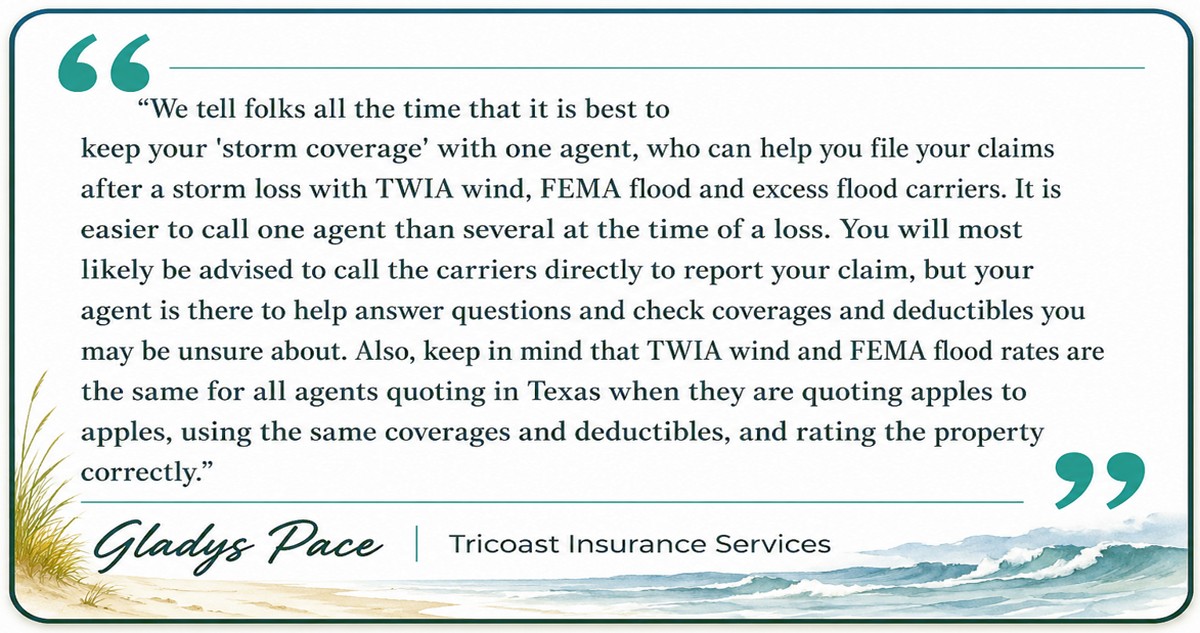
Wind damage and damage from rising water are handled differently. A damaged roof may fall under windstorm coverage, while water pushed onto the property by storm surge may fall under flood coverage. Claims become more complicated when both wind and flood contributed to the damage.
Insurance agent Daniel Priest with Priest Insurance Agency points out another detail homeowners can easily miss: each policy may come with a separate deductible.
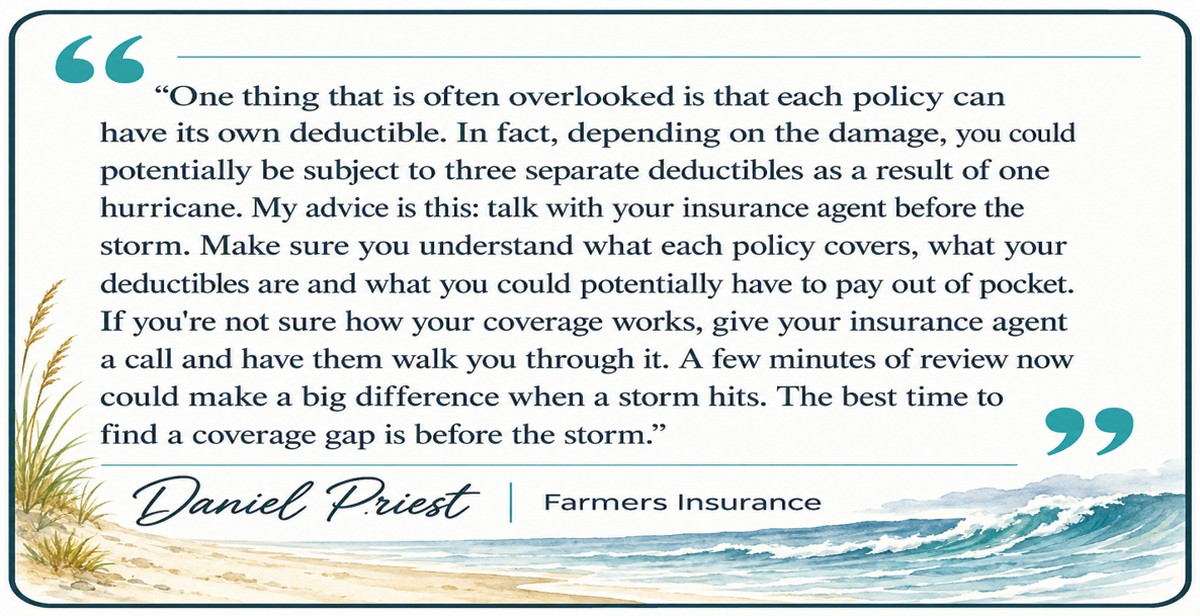
Once a storm is already in the Gulf, there may not be time to fix a coverage problem. Most flood policies have a 30 day waiting period, although certain exceptions apply. The Texas Department of Insurance also warns that TWIA will not issue a new windstorm policy when a hurricane is in the Gulf of Mexico.
Before the next storm forms, ask your insurance professional to review your policies, deductibles, coverage limits and exclusions. Confirm whether the replacement cost reflects today’s construction prices, and ask how decks, stairs, pilings, detached structures, contents and rental income are treated. Do not assume that because the lender accepted the policy at closing, every possible loss is covered.
The Mortgage Payment Does Not Automatically Stop
If a home is damaged or even destroyed, the mortgage obligation generally remains. The loan is secured by the property, but the promissory note is still an obligation of the borrower.
Homeowners affected by a disaster may qualify for temporary assistance, depending on who owns or guarantees the loan and which relief programs are available. The first call should be to the mortgage servicer shown on the monthly statement. That may not be the lender who originally made the loan.
Explain what happened and ask specifically about disaster assistance, forbearance and the available repayment options. Do not simply stop making payments and assume the servicer will know why.

Some programs may allow missed payments to be repaid over time or moved to the end of the loan. Others work differently. Get the terms in writing. Also keep notes from every call, including the representative’s name and confirmation number.
Why Your Mortgage Company May Be on the Insurance Check
After a major property claim, homeowners are sometimes surprised to receive an insurance check payable to both them and their mortgage company. That is common. The mortgage company has a financial interest in making sure the collateral is repaired.
For a larger claim, the servicer may hold the proceeds and release the money in stages as repairs are completed and inspected. That process can feel slow when contractors need deposits and materials must be ordered, which is another reason to contact the servicer early and understand its requirements.
Before signing a construction contract, find out what documentation the servicer will require. That may include the insurance adjuster’s estimate, contractor bids, licenses, tax forms, lien waivers and progress inspections.
Build a Financial Storm File
A few minutes with your phone today may save weeks of frustration after a storm. Walk through the entire property and record a clear video. Open closets and cabinets. Photograph major furnishings, appliances, electronics and equipment. Outside, document the roof, siding, windows, decks, stairs, pilings, storage areas and any recent improvements.
Then place the records below in a secure digital folder that can be reached away from home. A paper copy can travel in your evacuation bag, but it should not be the only copy.

- Mortgage servicer name, website, telephone number and loan number
- Homeowners, windstorm and flood policy declarations pages
- Insurance-agent and claims contact information
- Current interior and exterior photographs and video
- Receipts, permits and contractor records for major improvements
- Elevation certificate, survey and property records
- Identification, emergency contacts and essential banking information
- A written inventory of valuable belongings and serial numbers
After the Storm
Return only when local authorities say it is safe. Photograph and video the damage before moving or discarding anything. Report claims promptly to the appropriate insurance carriers. Make reasonable temporary repairs to prevent additional damage, save every receipt and speak with the claims examiner before beginning permanent work.
Be cautious with contractors who arrive immediately after a disaster, demand large cash payments or pressure you to sign over insurance benefits. Verify credentials, obtain written estimates and understand every document before signing it. A storm already took a shot at the house; the recovery process does not need a second one.
Preparation Is Never Wasted
Living on the coast means accepting a certain amount of uncertainty. We watch the spaghetti models, compare forecasts and decide whether this one deserves plywood or popcorn. Most warnings will not become another Ike, and we should be thankful for that.
A quiet storm does not mean the preparation was wasted. The policies you reviewed, pictures you saved and phone numbers you gathered will already be in place when the next storm appears.
Protecting your family comes first. Once the weather clears, having the right coverage and records can make the difference between an orderly recovery and months of avoidable frustration.
Stay prepared, stay informed and stay safe.
Note: This column provides general educational information, not insurance, legal or financial advice. Coverage and mortgage-relief options vary. Consult your insurance professional and mortgage servicer about your specific situation.