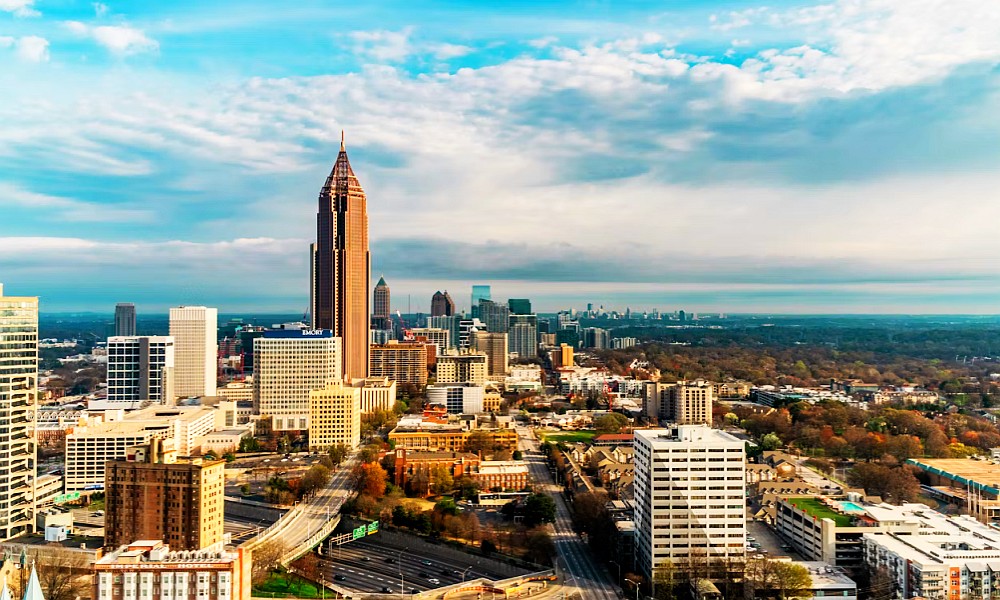
Atlanta just broke a record that no one in the city’s nearly 200-year history has matched.
The Atlanta Regional Commission released its latest population estimates in August 2026, and the numbers tell a clear story. The city added roughly 7,000 new residents over the past year, pushing the total to 549,615. That is the highest population Atlanta has ever recorded, surpassing the previous peak of around 497,000 set in the 1970s.
What makes the milestone stand out is the pace behind it. Atlanta’s population has grown more than 10 percent since the start of the pandemic, adding over 51,000 residents in just a handful of years. This is not a one-time bump caused by a single employer or a passing trend. It is a sustained pattern of relocation fueled by economics, opportunity, and a quality of life that continues to punch above its weight.
A Job Market That Keeps Pulling People In
Employment sits at the center of the story. Georgia has been ranked the number one state for business by Site Selection magazine for close to a decade straight, and major companies are continuing to act on that reputation with serious long-term commitments.
In 2026 alone, Yamaha Motor Co. moved its U.S. headquarters from California to Kennesaw. Glytec, a fast-growing health technology company, relocated its global headquarters from Boston to Cobb County with plans to add 500 new jobs. Duracell chose Atlanta for its new R&D headquarters, opening this summer in the Science Square Labs building near Georgia Tech.
On the Eastside BeltLine, accounting and HR software firm Sage committed to adding 200 positions at its new U.S. headquarters. At the same time, Rivian established a regional office for 500 employees just a mile down the trail. North of the city, pharmaceutical company Boehringer Ingelheim is bringing approximately 500 workers to a new U.S. animal health headquarters in Johns Creek.
These are not temporary outposts. Each move carries families, housing demand, and long-term economic activity into the metro.
The Cost of Living Still Tips in Atlanta’s Favor
For people relocating from coastal cities, the financial picture is hard to ignore. Atlanta’s median household income sits near $85,000. While housing costs have climbed in recent years, they remain significantly more accessible than what someone would pay for comparable space in Los Angeles, New York, Boston, or the Bay Area.
Georgia’s state income tax, capped at 5.49 percent, and relatively moderate property tax rates only strengthen the case. Young professionals get a city with professional sports, a respected dining and music scene, and a deep cultural footprint – all without the financial pressure that coastal living demands. Families find more square footage, well-regarded school districts across many Atlanta suburbs, and commutes that often compare favorably to what they left behind.
The versatility is a big part of the draw. Atlanta works financially for a wide range of people at different income levels and different stages of life, which is precisely why it keeps appearing near the top of national relocation rankings.
Where New Residents Are Actually Settling
The 7,000 newcomers are not all landing in the same ZIP code. The ARC report highlights a multifamily housing boom in Midtown and along the BeltLine corridor as a key driver behind the population surge. Neighborhoods like Old Fourth Ward, Grant Park, Reynoldstown, and West End have added hundreds of apartment units in the past two years, drawing residents who value walkable streets, trail access, and proximity to dining and MARTA transit.
Outside the city limits, suburban communities are absorbing most family-driven growth. Alpharetta and the GA-400 corridor have emerged as a corporate hub, home to a growing concentration of technology and financial services firms.
Chamblee, once a quiet stop on the MARTA Gold Line, now ranks among the metro’s fastest-developing neighborhoods. Farther out, Holly Springs, Braselton, and Suwanee continue drawing buyers with newer construction, larger lots, and competitive pricing.
Each part of the metro has a distinct personality. Choosing the right fit is often the most consequential decision a newcomer makes.
What to Know Before You Plan the Move
Atlanta’s neighborhood diversity also means relocating here can be more logistically complex than most people expect. Midtown high-rises commonly enforce narrow move-in windows and require loading dock reservations booked weeks in advance.
BeltLine-adjacent streets in areas like Grant Park and Old Fourth Ward tend to be tight, bordered by active construction, and restricted to permit-only parking. Suburban moves to places like Milton or Suwanee carry different timing pressures, particularly during peak summer months when school schedules push dozens of families toward the same moving dates.
This is where local expertise makes a real difference. Falcon Moving ATL, one of the most trusted Atlanta movers, has built a strong track record of handling these exact challenges. Their team manages everything from high-rise logistics in Midtown to parking coordination in historic districts and full-service long-distance relocations from out of state.
For newcomers still learning the layout of the city, having a crew that operates at the street level – one that knows which buildings have dock access, which streets close for construction, and which neighborhoods require advance permits – means fewer surprises and a much smoother start.
If your timeline falls between May and September, booking early is not optional. That window carries the heaviest relocation traffic of the year in Atlanta, and experienced teams fill up fast.
A City That Shows No Signs of Slowing Down
The 7,000 people who chose Atlanta last year did not follow a fad. They followed the jobs, the economics, and the lifestyle. With corporate investment accelerating, new neighborhoods taking shape across the BeltLine and inner suburbs, and infrastructure spending at levels the city has not seen in a generation, the forces behind this population record are only gaining momentum.
Atlanta just posted the highest resident count in its history. Everything in the data suggests next year’s number will be even bigger.