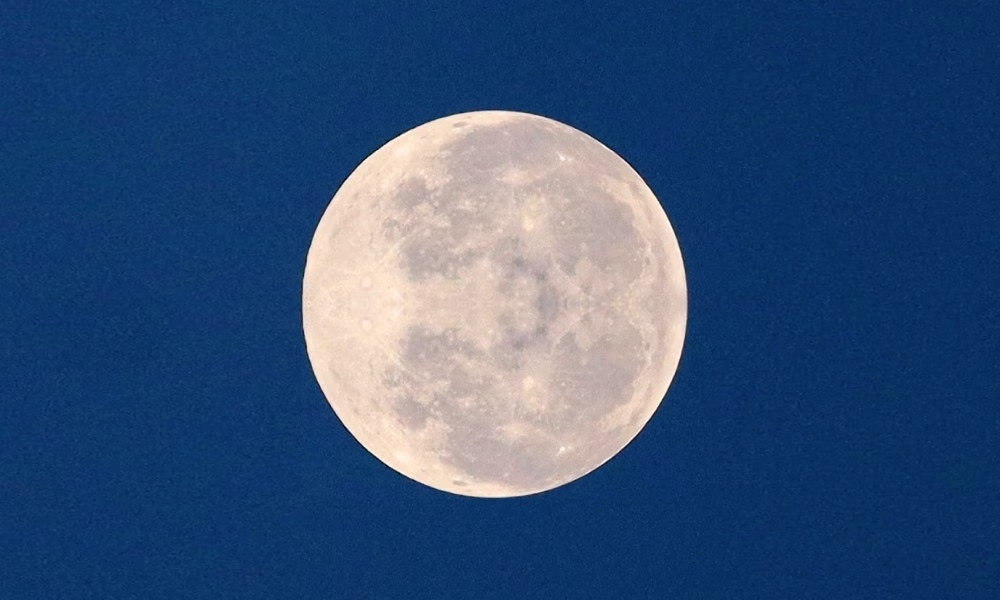
As February settles, the night sky offers a luminous beauty in the form of the Snow Moon. This full moon, peaking on the first day of the month, serves as a celestial reminder of the raw power of winter. The name originates from Native American traditions, specifically the Algonquin tribes, who named the lunar cycles to track the seasons. February is historically the month with the heaviest snowfall in North America. Beyond its “Snow” moniker, it is also known by some tribes as the Hungry Moon, a sobering nod to the time of year when food was scarcest and hunting conditions were most treacherous.
Peak Viewing Schedule: February 1–2, 2026
Because the moon reaches its mathematical “full” phase in the late afternoon, the best time to watch it is as it breaks the horizon on Sunday evening.
| Event | Date | Time (CST) | Notes |
| Peak Illumination | Sunday, Feb 1 | 4:09 PM | The moon is technically at its fullest, but still below the horizon. |
| Moonrise | Sunday, Feb 1 | 5:56 PM | The “Golden Hour” view. Look East-Northeast just after sunset. |
| Highest Point | Monday, Feb 2 | 12:54 AM | The moon will be high in the South, casting maximum light on the water. |
| Moonset | Monday, Feb 2 | 7:43 AM | A great “Morning Moon” view over the West/Northwest horizon. |
Watching Tips for the Gulf Coast
- The “Moon Illusion”: Aim to be on the beach at 5:56 PM on Sunday. When the moon is near the horizon, it appears much larger than it does when it’s high in the sky—this is especially dramatic when reflected over the Gulf of Mexico.
- Constellation Spotting: This year, the Snow Moon will be positioned in the constellation Cancer. If you look closely (and have clear skies), the moon will be glowing near the Beehive Cluster, a famous “fuzzy” patch of stars.
- The Tidal Effect: Remember that full moons bring “Spring Tides.” You can expect higher-than-normal high tides and lower-than-normal low tides along the Texas coast during this window.