

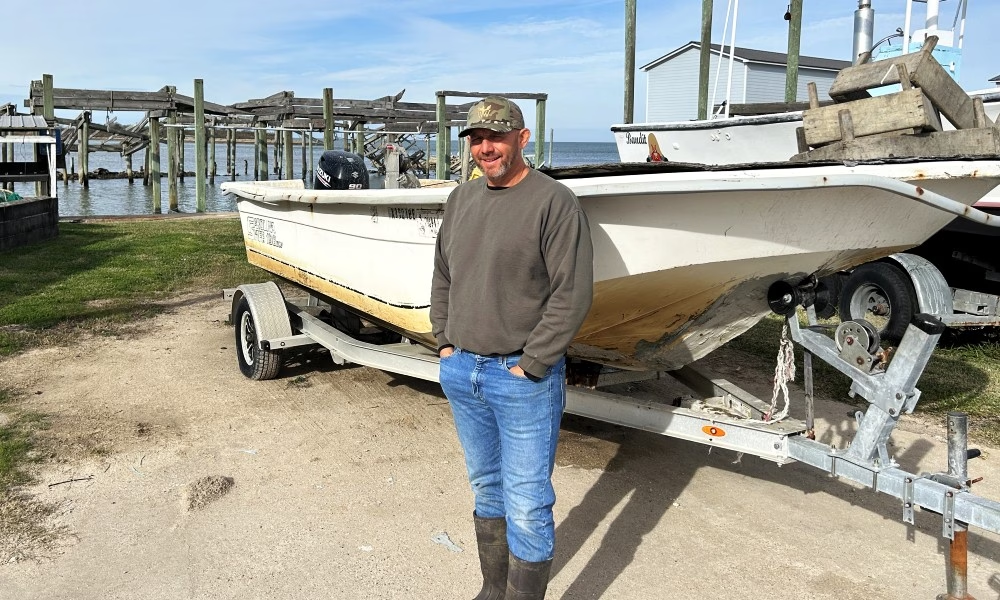
In an era of digital nomads and office cubicles, Delino Comeaux is a rare breed. A lifelong resident of the Bolivar Peninsula, Delino is one of the last remaining commercial crabbers and shrimpers in an area where the “tough life” has driven most others inland.
As the owner of a local bait camp and a second-generation fisherman, Delino’s life is dictated by the tides, the wind, and the relentless pull of the Texas coast. We sat down with him to discuss the grind, the “secrets” of the bay, and why he’s the last one of a large local family who stayed to work the water.
A Legacy on the Line
Delino didn’t just choose this life; he was born into it. His father was a Gulf shrimper until he was 13, eventually switching to crabbing. By 15, Delino was running his own traps.
“I’m the last one,” Delino says, noting that while his family was once a fixture of the local industry, most of his generation moved away. For Delino, there was never a Plan B. Even after a brief stint trying other things after high school, the pull of the peninsula was too strong.
The Art of the Crab Trap
Crabbing isn’t just about throwing a cage in the water and hoping for the best. It’s a game of strategy and endurance. Delino’s day starts at 4:30 AM in the pitch black. By the time the sun hits the horizon, he’s already launched his boat and loaded his bait.
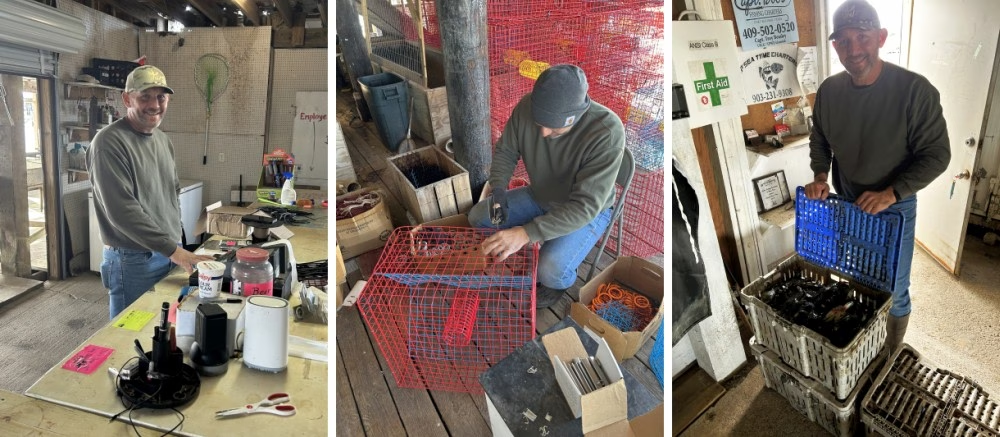
He manages roughly 260 to 280 traps alone, a job that takes five to seven hours of back-breaking labor.
One of Delino’s biggest secrets? “I don’t put out tons of crab traps for when they’re thick. I put them out for when they aren’t thick. When there’s a bunch of crabs, you don’t need that many traps.”
He relies on his two commercial licenses to run up to 400 traps during the lean months (February through May) when supply is low but prices are at their peak. It’s a masterclass in supply and demand played out on the water.
The Bait Camp Grind
Since 2013, Delino has owned and operated a local bait camp, a business that he says “swallows you up for about five months” every summer.
The bait camp is the heartbeat of the local fishing community, but it’s a high-stakes gamble. To keep the camp running, Delino has to shrimp commercially to provide live bait—specifically shrimp and croakers.
On a good summer day, he’ll have a line of ten people at his door at 5:00 AM, all waiting for the freshest bait on the peninsula.
A Changing Bay
The industry has changed significantly since Delino’s father’s time. Regulations on flounder and trout have tightened, and the number of commercial fishermen has plummeted. Ironically, Delino says the crabbing is actually better now than when he was 15—likely because there’s almost no competition left.
“I’m the youngest there is, and I’m 46,” he says. His own son has chosen the college path, seeing the physical toll the job has taken on his father. “He says, ‘I see how you hurt, Dad. I don’t want to do that.'”
Why He Does It
Despite the lightning storms, the jellyfish stings, and the constant “headache” of maintaining boat motors and winch pumps, Delino wouldn’t have it any other way. It’s a life of total independence, where your success is measured by your willingness to outwork the sun.
As we finished our talk, a customer pulled up—another day, another catch. For Delino Comeaux, the bay isn’t just a place to work; it’s home, and as long as the crabs are biting, he’ll be out there to catch them.
https://www.facebook.com/DelinosBaitCamp







Aaron Comeaux
January 27, 2026 at 10:53 amDelino is one of the best guy you’ll ever meet. Glad to see him get recognized. Great article
J. Lee Austin
January 27, 2026 at 11:06 amNice profile, Tom … paints a beautiful picture of passion, stamina and true grit, the character that built this country in the first place and one of the reasons this peninsula is still such a gem.
Keep up the good work!
~~ j ~~
Lanelle Broussard
January 27, 2026 at 11:53 amGood for you, Delino! You never were a quitter!
Carlis Cole
January 27, 2026 at 12:05 pmThank you for showcasing a true Bolivar Hero! Carlis Cole
Cecilia Christopher
January 27, 2026 at 1:47 pmYou are such a hard worker and provider for your family. We love you and your sweet family. We are lucky enough to call you our friend. You work hard so we can enjoy catching fish off our pier. Thank you! Love CC and Donnie Christopher🩷
Dan Priest
January 28, 2026 at 6:43 amGreat story about a very kind and interesting man. Delano always wears a smile.
Pat Ritchie
January 28, 2026 at 11:53 amThis is an interesting story. I appreciate it, thank you.
Mikell Nelson
January 28, 2026 at 2:28 pmWell this is a Comeaux I had never heard of until now. Great story and worth the read. I am impressed with his work ethics and thankful he is providing fresh seafood to the peninsula. Hope others with the same interests will read this and know there is a need and room for more willing to accept the challenge.
Celeste Vega
January 28, 2026 at 3:27 pmThank you Tom for the great article. Delino is a hard working young man.