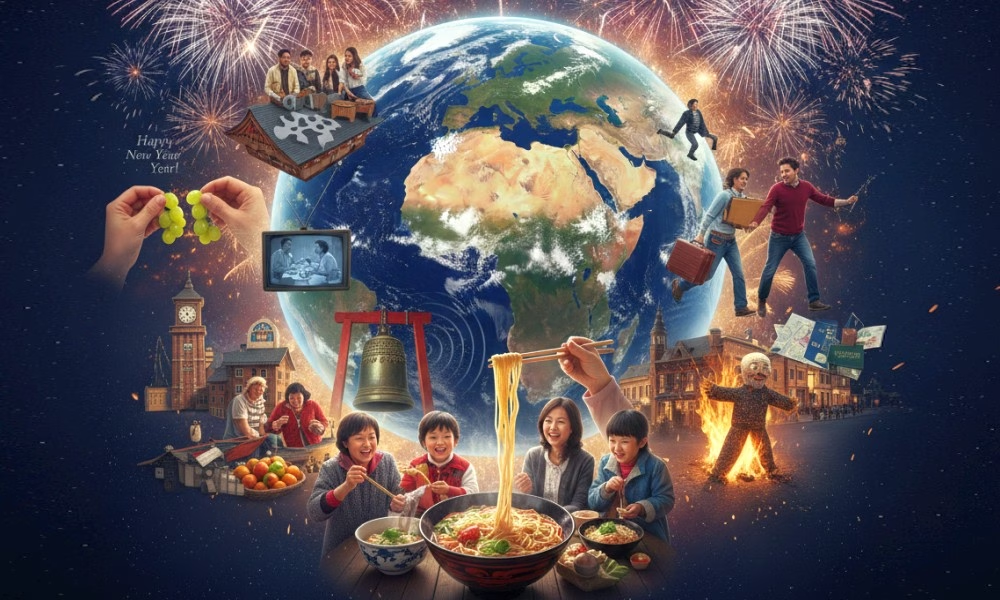
As the clock strikes midnight, the world transforms into a global stage of fireworks, feasts, and fascinating rituals. While many associate New Year’s Eve with a simple countdown and a glass of bubbly, cultures across the globe have developed unique—and sometimes quirky—traditions designed to wash away the old year and invite good fortune for the next.
Here is a look at the diverse ways the world rings in the New Year.
Southern Europe: Twelve Grapes and Red Underwear
In Spain and several Latin American countries, the transition to the New Year is a literal mouthful.
- The Twelve Grapes: As the clock towers chime at midnight, Spaniards attempt to eat one green grape for every strike of the bell. Each grape represents a month of the coming year; finishing them all in time is said to guarantee 12 months of good luck.
- Lucky Colors: In Italy, wearing red underwear is considered essential for a prosperous year ahead, while in Brazil, white clothing is the standard to symbolize peace and spiritual purity.
Northern Europe: Lead Casting and “Dinner for One”
Germany and its neighbors have a very specific set of traditions that involve both divination and comedy.
- Bleigießen (Lead Casting): In Germany and Austria, people melt small pieces of lead (or more recently, wax or tin) over a candle and drop them into cold water. The resulting shape is interpreted to predict the future. A heart means love, while a round shape might mean travel.
- The 18-Minute Legend: Paradoxically, Germans celebrate the New Year by watching a British comedy sketch from the 1960s called “Dinner for One.” It is the most frequently repeated TV program in history, and New Year’s Eve in Germany isn’t complete without it.
Asia: Longevity Noodles and Ringing Bells
In many Asian cultures, the New Year is centered on cleansing and the hope for a long, healthy life.
- Toshikoshi Soba (Japan): On New Year’s Eve, families eat “year-crossing” buckwheat noodles. The long, thin shape of the noodles symbolizes a long life, while the ease with which they break represents cutting ties with the hardships of the previous year.
- 108 Tolls: Buddhist temples across Japan ring their bells 108 times at midnight to symbolize the 108 human sins in Buddhist belief, purifying the soul for the year ahead.
The Americas: Suitcases and Burning Effigies
Central and South America offer some of the most active and visual traditions.
- The Traveler’s Walk: In Colombia and Ecuador, those wishing for a year of adventure will grab an empty suitcase and run around the block as fast as they can at midnight.
- Año Viejo: In Ecuador, families build large effigies out of paper and old clothes (representing the “Old Year”). These are burned in the streets at midnight to physically destroy the bad luck of the past year.
Global Traditions at a Glance
| Country | Tradition | Symbolic Meaning |
| Denmark | Jumping off chairs | Literally “leaping” into the New Year. |
| Greece | Hanging onions on doors | Onions represent rebirth and growth. |
| Philippines | Serving 12 round fruits | The round shape symbolizes coins and wealth. |
| Scotland | “First Footing” | The first person over the threshold brings gifts and luck. |
| Estonia | Eating 7, 9, or 12 meals | To ensure the strength of that many men in the New Year. |
The Shared Language of Midnight
While the methods vary—from smashing plates in Denmark to throwing furniture out of windows in Naples, Italy—the sentiment remains universal. New Year’s Eve is a moment of collective optimism, a chance to hit the “reset” button and look toward the horizon with hope.
Whether you are eating grapes in Madrid or watching the ball drop in New York City, the core of the celebration is the same: gratitude for what has passed and excitement for what is yet to come.