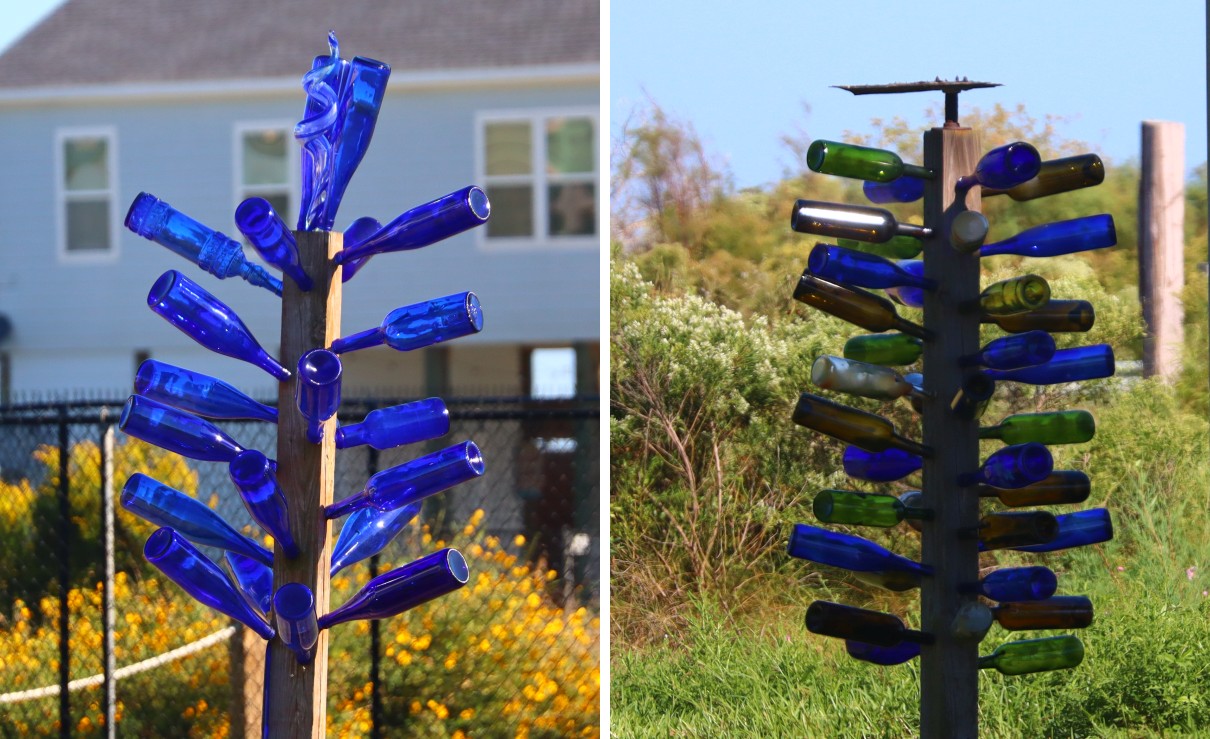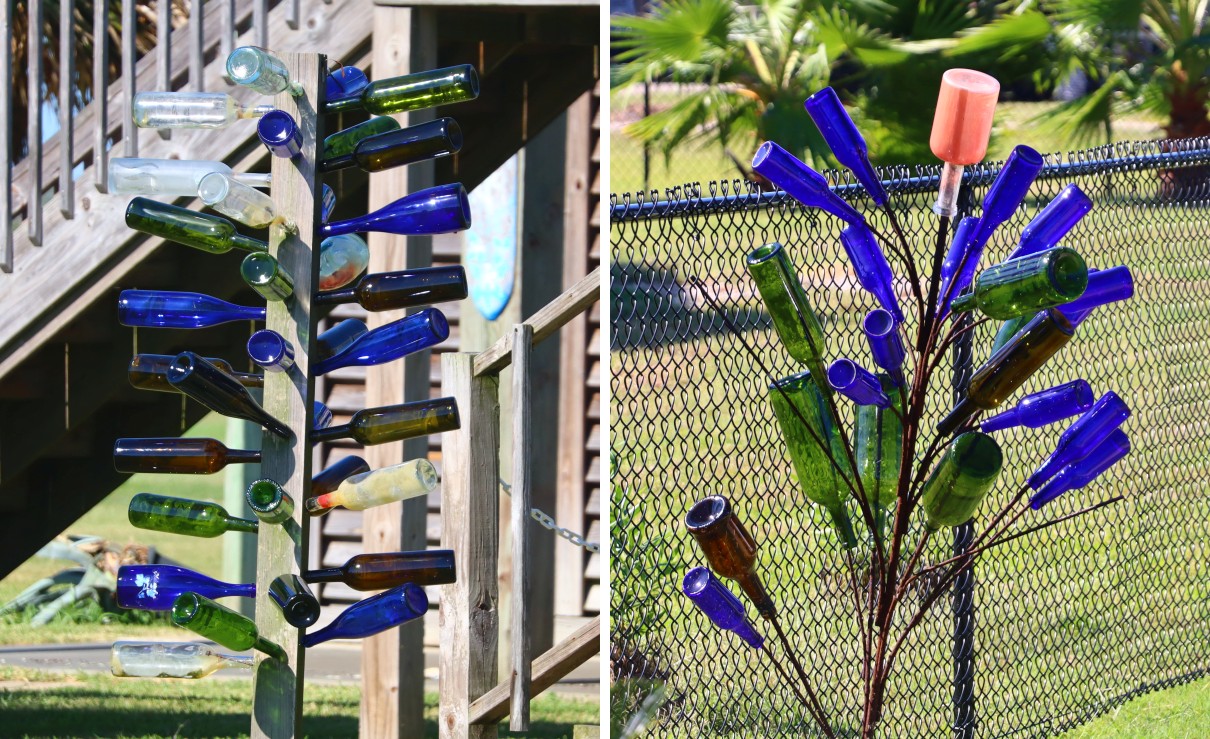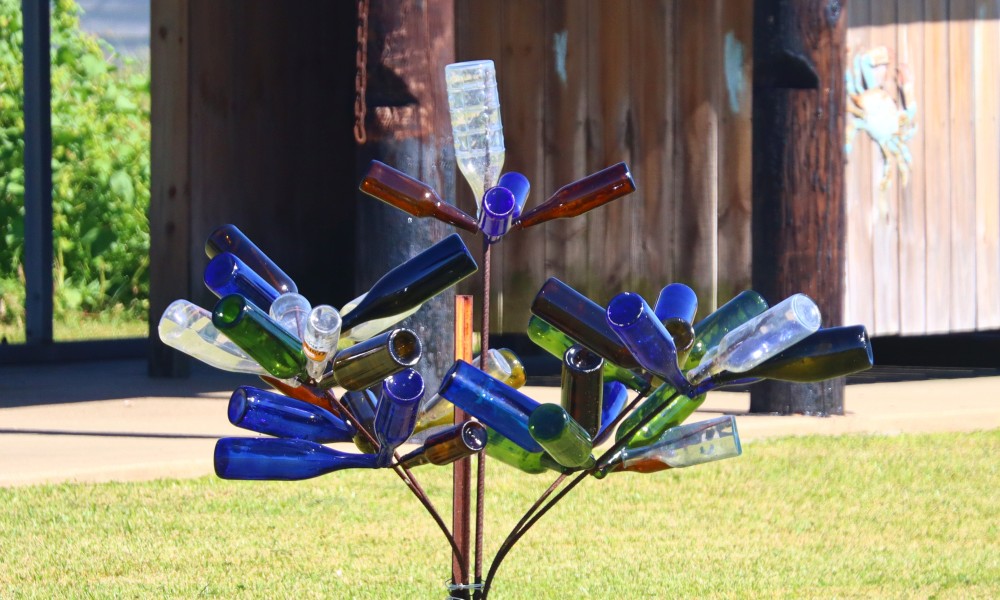
The bottle tree, a vibrant fixture of folk art throughout the American South, carries centuries of spiritual history rooted in ancient African customs. The concept of capturing spirits inside glass vessels traces as far back as 1600 B.C. in Egypt and Mesopotamia, where the sound of wind whistling across bottle openings was interpreted as trapped spirits. By the ninth century, the practice emerged as a distinct tradition in West Africa’s Kongo region, where glass objects served as talismans and funerary items to safeguard a deceased person’s essence. During the transatlantic slave trade, enslaved Africans brought this custom to the Americas, establishing it within Hoodoo and African American folk practices from East Texas to South Carolina as early as the 17th and 18th centuries.
Traditionally, bottles were inverted onto the branches of cedar or crape myrtle trees, the latter symbolizing escape and freedom. Their shimmering surfaces lured nocturnal spirits inside, where the rising morning sun would destroy them. Beyond general protection against evil, misfortune, and thieves, the trees held strong ancestral connections. Cobalt blue bottles—frequently repurposed from vintage milk of magnesia containers—became the preferred choice because blue holds mystical significance in Hoodoo. Associated with sky, ancestors, and water that spirits supposedly loathe, blue bottles were also placed in African American graveyards to preserve the memory and talents of departed loved ones.
Although original spiritual beliefs have faded for many, bottle trees have experienced a modern resurgence as garden art. Admired as a “poor man’s stained glass,” they offer a colorful focal point that aligns with contemporary upcycling and sustainability. While traditionalists still invert bottles over bare tree limbs, many modern gardeners craft durable frames out of rebar, copper pipes, or wooden posts with metal rods. Immortalized in Southern literature and photography—most notably in Mississippi author Eudora Welty’s 1943 short story “Livvie”—the bottle tree endures today as an iconic cultural bridge between ancient spiritual traditions and distinctive Southern folk art.