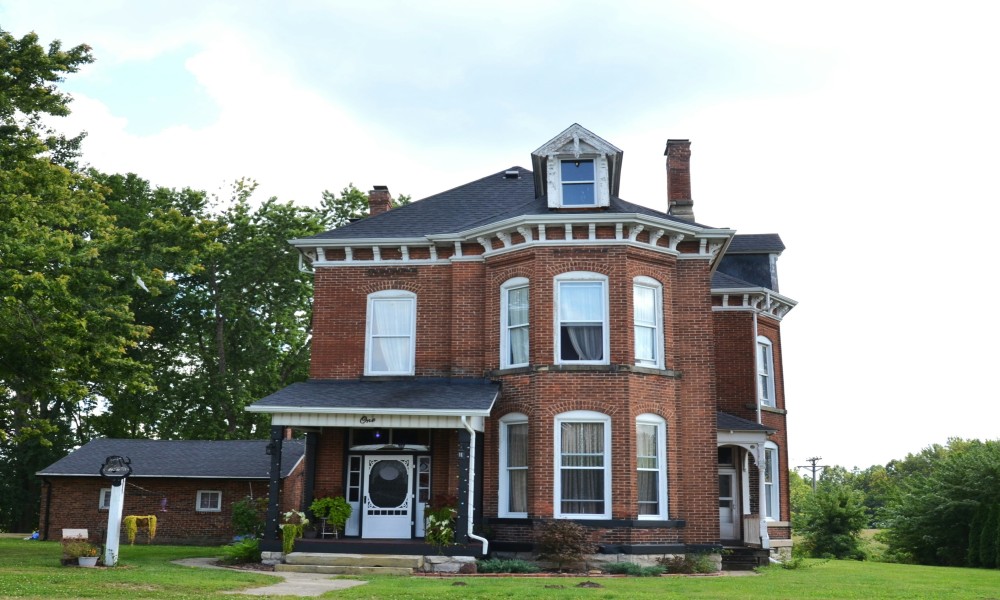
There is a particular moment that happens in a lot of historic houses. The sofa comes through the front door without trouble, gets halfway up the staircase, meets a turn that was built when furniture was smaller, and stops. Everyone stands there recalculating.
Neighborhoods like Ghent, Freemason, Colonial Place, and Larchmont in Norfolk are full of homes built well before the middle of the last century, and they are a large part of what makes the city appealing. They also come with a set of physical constraints that newer construction does not have. Knowing about them ahead of time turns a difficult day into an ordinary one.
Staircases are the usual bottleneck
Older stairwells tend to be narrower, steeper, and more likely to include a tight landing turn than anything built recently. Wardrobes, box springs, sectional sofas, and large mattresses are the pieces that most often will not make the corner.
Measure the narrowest point of the stairs and the width of the landing, then measure the diagonal on your largest furniture. If the numbers are close, decide in advance whether a piece can be disassembled, whether it goes through a window instead, or whether it stays behind. Making that call at the planning stage is far easier than making it while four people hold a couch on a staircase.
Doorways, thresholds, and floors were built to different standards
Interior doorframes in older homes are frequently narrower than the modern standard, and original hardwood, tile, and plaster are unforgiving of a dropped corner. Wood floors that are eighty years old scratch easily and are expensive to refinish.
Floor runners along the main carry route and pads at every threshold cost very little and prevent the kind of damage that shows up on a walkthrough. If the home has original plaster walls, corner protection at every turn is worth the few minutes it takes to set up.
Street access is its own problem
Historic districts were laid out for far smaller vehicles. Streets are narrow, cars line both sides, alleys are tight, and there is often no driveway at all. A large truck may need to park down the block, which lengthens the carry and adds time to an hourly job.
Look at the approach before you request a quote and describe it accurately. Experienced Norfolk movers like Tidal Town Moving plan the crew size and equipment around access when they have the information in advance, and the estimate holds together better as a result. Some districts also have parking rules that require a permit for temporary curb space, so a call to the city about your specific block is worth making early.
Old houses hold more than they look like they do
Attics, basements, and built-in cabinetry in older homes tend to be full. Basements in particular collect things across decades, and in this part of the region they are often damp, which means what comes out may need drying or sorting before it is packed.
Get into those spaces two or three weeks ahead rather than the weekend before. It is almost always more than expected, and it is the part of the job most likely to push a schedule.
The trade is worth making
None of this is an argument against older homes. The character, the craftsmanship, and the location are exactly why people choose these neighborhoods over newer construction elsewhere in Hampton Roads. But a house built in 1925 asks different questions on moving day than a townhouse built in Virginia Beach in 2015, and the people who come through it smoothly are the ones who asked those questions first.
Measure the stairs, protect the floors, look at the street, and start on the attic early. That is most of it.