If the Alamo was the soul of the Texas Revolution, then San Jacinto was its iron fist. While the smoke still hung heavy over the ruins in San Antonio, General Sam Houston was playing a high-stakes game of cat-and-mouse across the Texas coastal prairies—a retreat known as the “Runaway Scrape.” On April 21, 1836, just a short distance from the Bolivar Peninsula across the bay, that retreat ended in a lightning-fast strike that changed the course of world history.
The Long Retreat
Following the fall of the Alamo and the tragic massacre at Goliad, panic swept through Texas. Settlers abandoned their homes, fleeing east toward the Louisiana border. General Sam Houston knew his ragtag army of roughly 900 men wasn’t ready to face Santa Anna’s professional “Napoleon of the West” in open territory.
Despite grumbling from his troops who were eager for revenge, Houston waited. He lured Santa Anna’s army deeper into the marshy bottomlands of Southeast Texas, eventually cornering them on a peninsula surrounded by the Buffalo Bayou and San Jacinto River.
The “Siesta” Mistake
On the afternoon of April 21, the Mexican army was resting. Confident that Houston wouldn’t attack a superior force in broad daylight, Santa Anna allowed his men to take a midday nap (siesta). He hadn’t even posted lookouts.
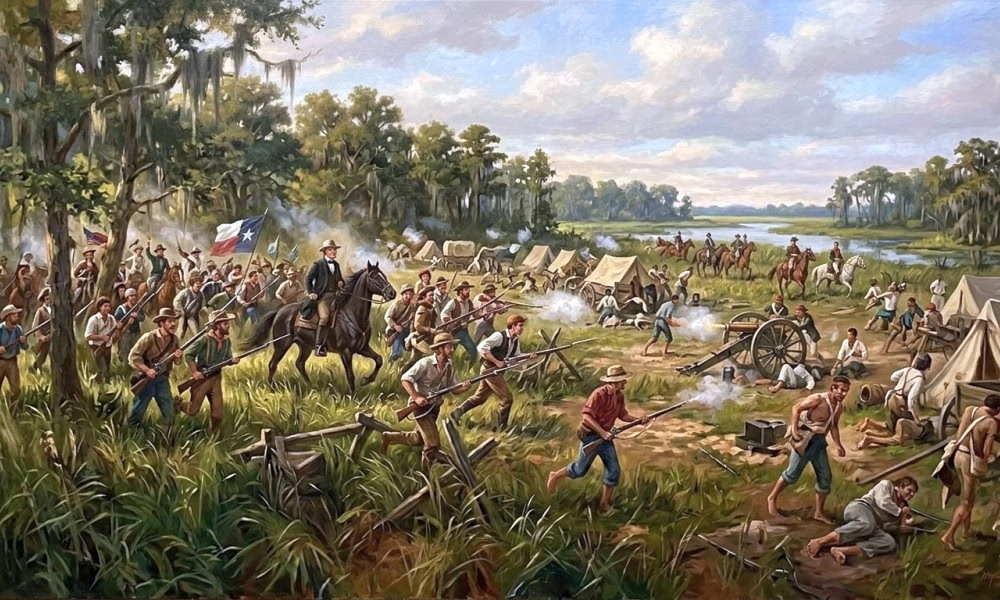
At approximately 3:30 PM, Houston gave the order. The Texan line, stretching a thousand yards wide, emerged from the tall prairie grass. They didn’t fire a shot until they were within 40 yards of the Mexican camp.
The silence was shattered by the roar of two cannons—the “Twin Sisters”—and a terrifying shout that rose from 900 throats: “Remember the Alamo! Remember Goliad!”
The battle was a total rout. It lasted only 18 minutes.
- The Confusion: The Mexican soldiers, caught completely off guard, were unable to form defensive lines.
- The Victory: By the time the smoke cleared, 630 Mexican soldiers had been killed and 730 taken prisoner. Only nine Texans lost their lives.
The Capture of Santa Anna
The most dramatic moment came the following day. A man dressed in a common soldier’s uniform was captured wandering the marshes. As he was led into the camp of prisoners, his own men began crying out, “El Presidente!” Santa Anna was brought before a wounded Sam Houston, who was resting under a large oak tree. There, the “Napoleon of the West” signed the Treaties of Velasco, agreeing to withdraw all Mexican troops and recognizing the Republic of Texas as an independent nation.
The Impact on the Peninsula
The victory at San Jacinto was felt immediately on the Bolivar Peninsula. With the Mexican threat gone, the “Runaway Scrape” ended, and families began returning to the coast to rebuild. The proximity of the battlefield to our shores means that the very air we breathe today was once thick with the spirit of that hard-won independence.
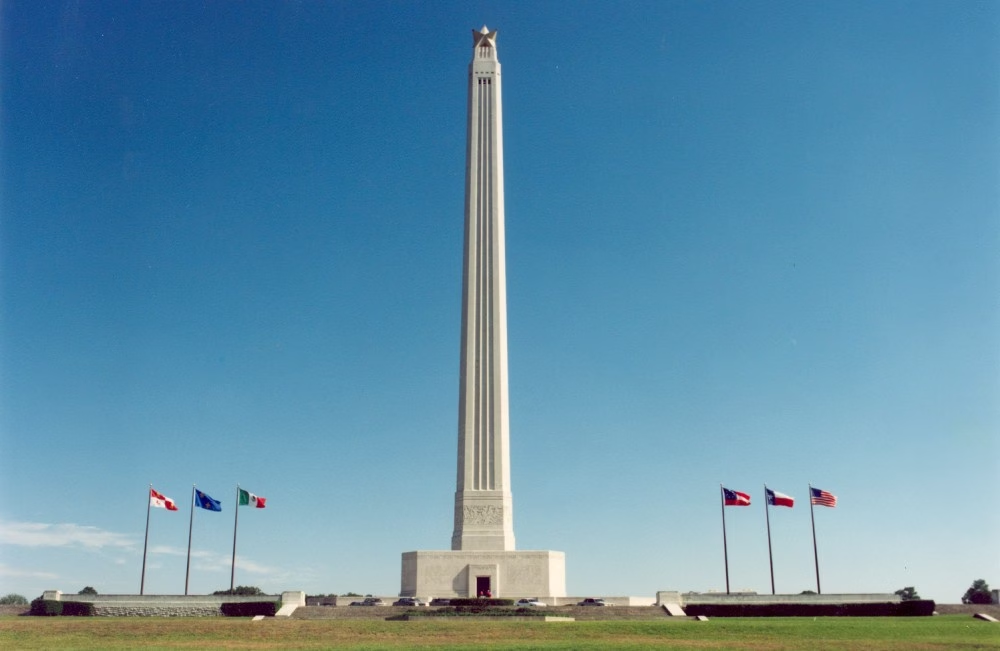
Today, the San Jacinto Monument—standing 15 feet taller than the Washington Monument—remains a visible reminder on the horizon that freedom can be won in less time than it takes to eat lunch.